Hackathons · Robotics · Highlights
SightSense
Experimental guide-cane prototype using iPhone LiDAR, local GX10 vision, and a Raspberry Pi motor controller.
About this project
SightSense is an experimental smart-cane prototype developed for the ASUS Local AI track at the UCSC AI Hackathon, where it won 1st place overall. The iPhone captures the camera, LiDAR depth, and pose. An NVIDIA GX10 runs AI inference and depth-based obstacle guidance locally, then sends direction commands to a Raspberry Pi motor controller at the cane tip. Place lookup runs on the phone with Apple Maps.
The repository includes software simulations and mock GPIO checks; physical wheel direction and full end-to-end hardware behavior still need verification. It is not a replacement for a white cane or guide dog, and it has not been tested with blind users.
The model below is a CAD preview, not a live guiding demo. Physical wheel direction and end-to-end behavior still need verification.
Photos
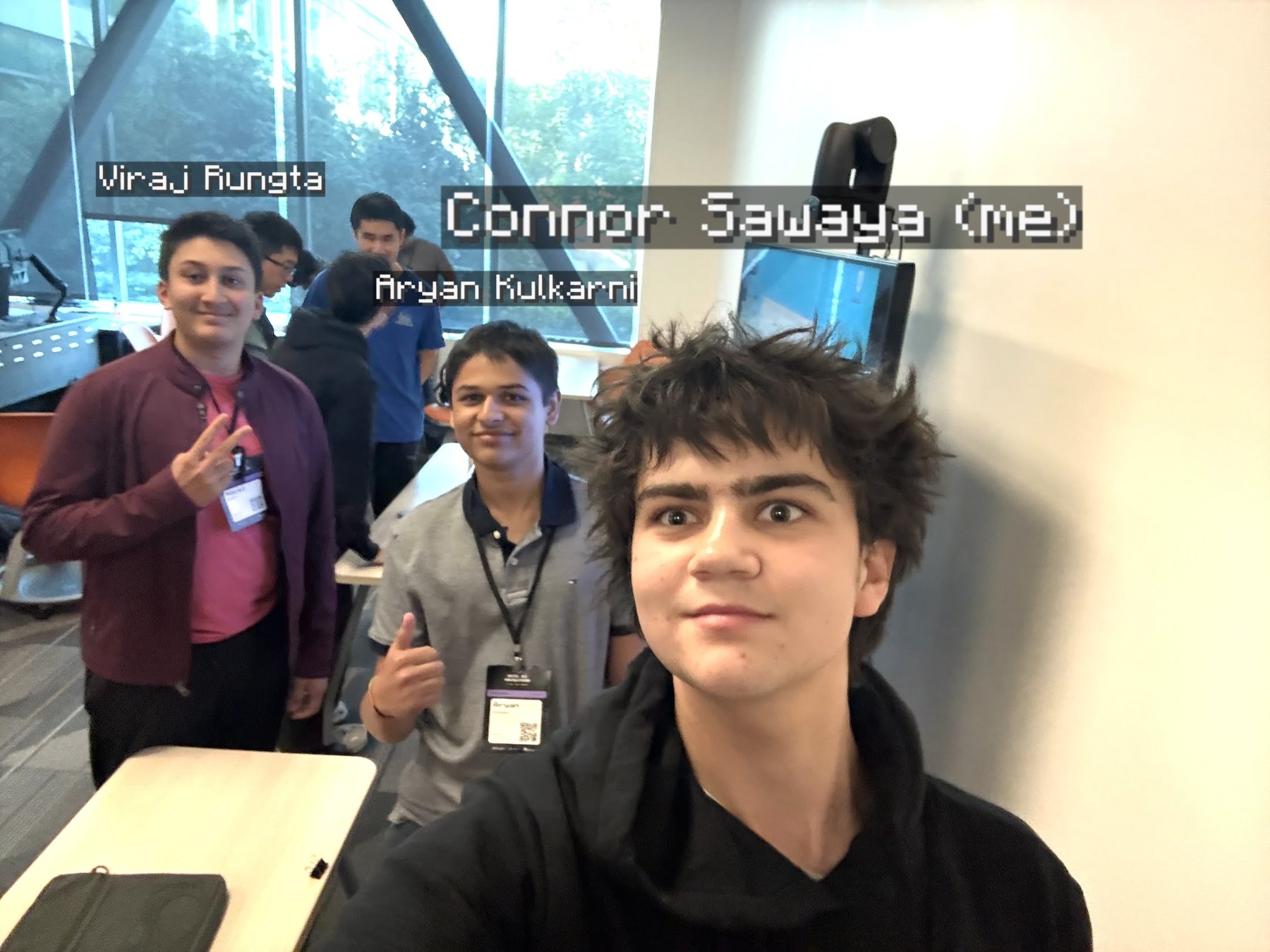
At the hackathon
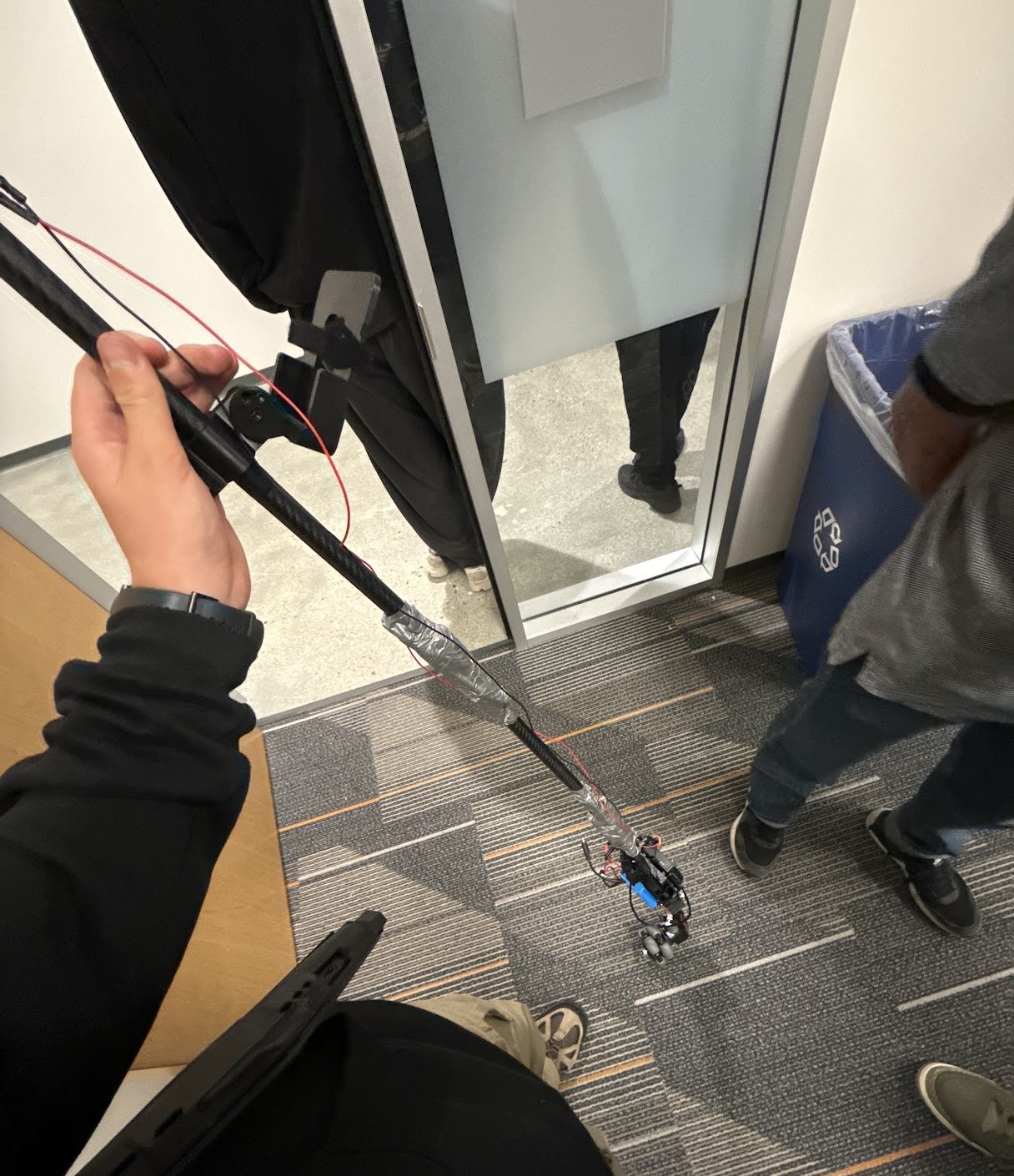
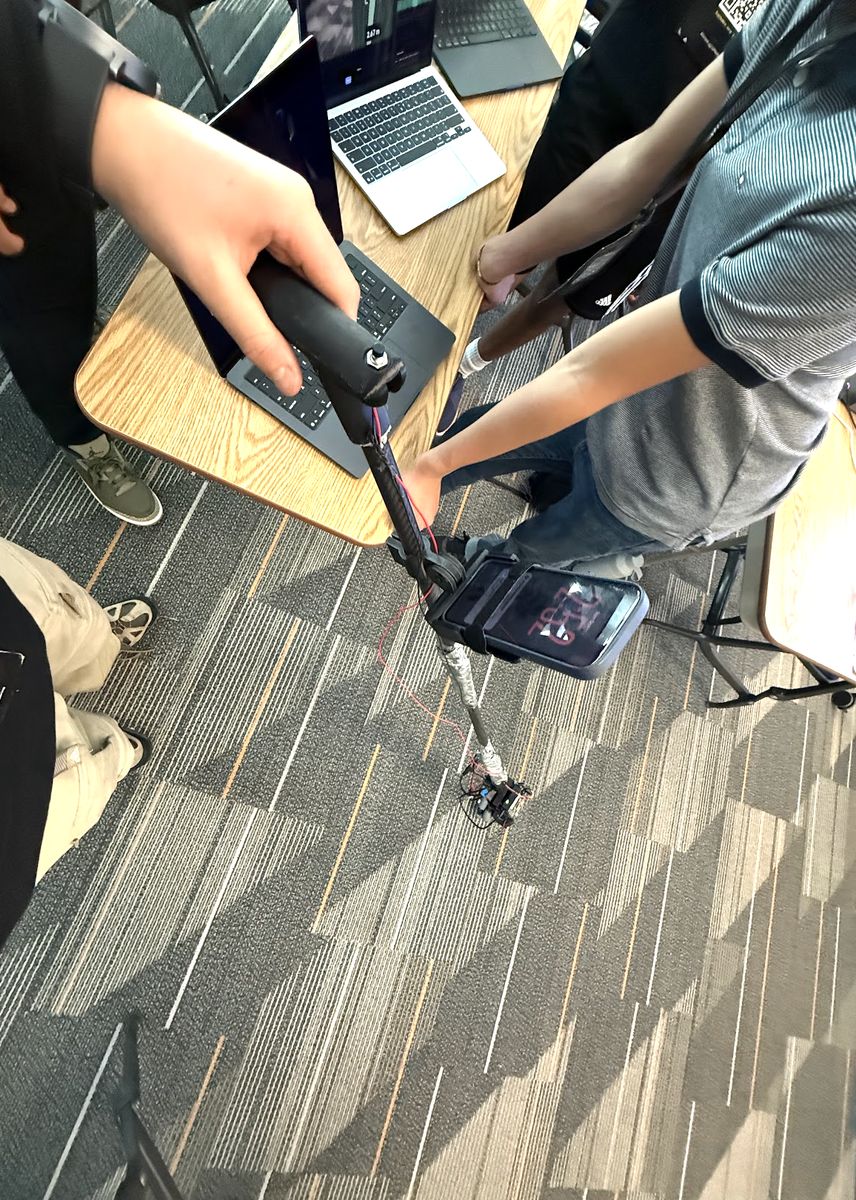
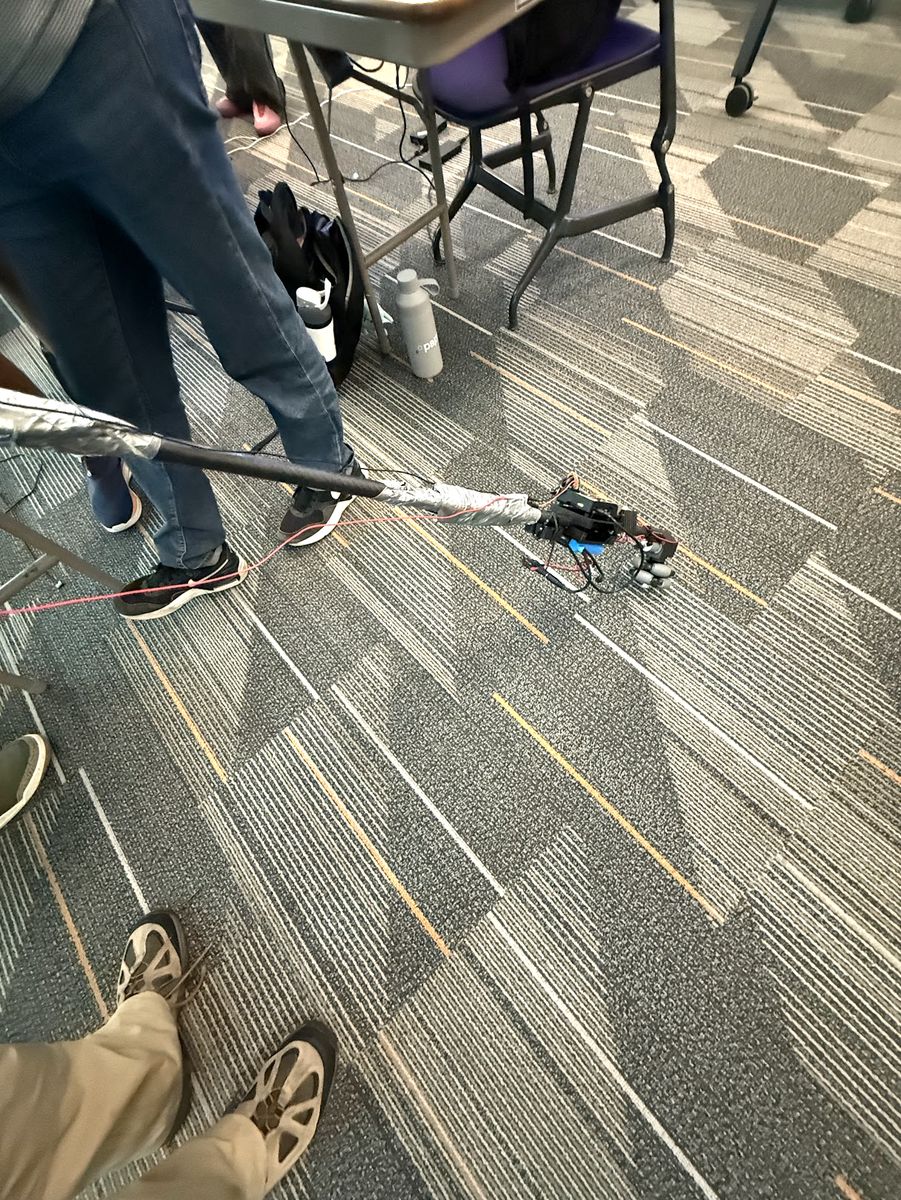
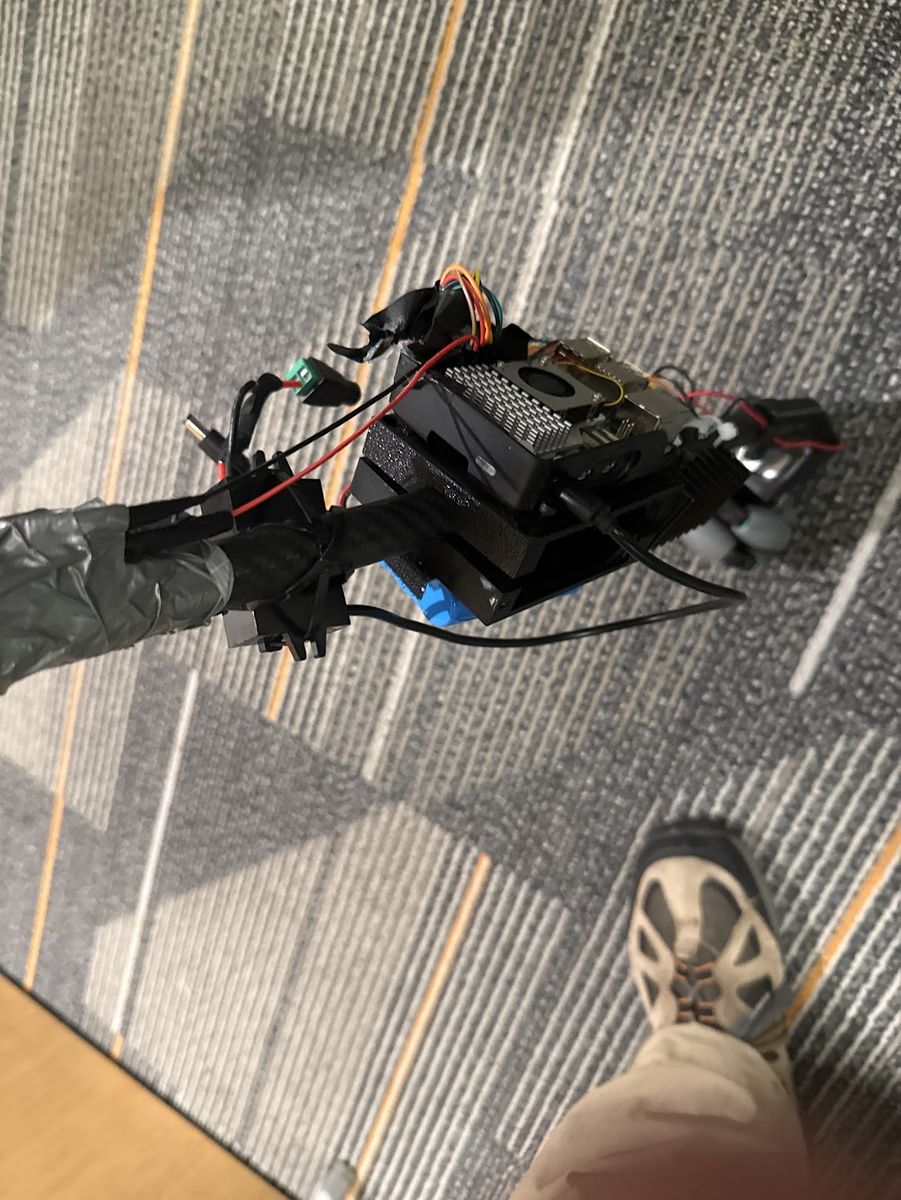
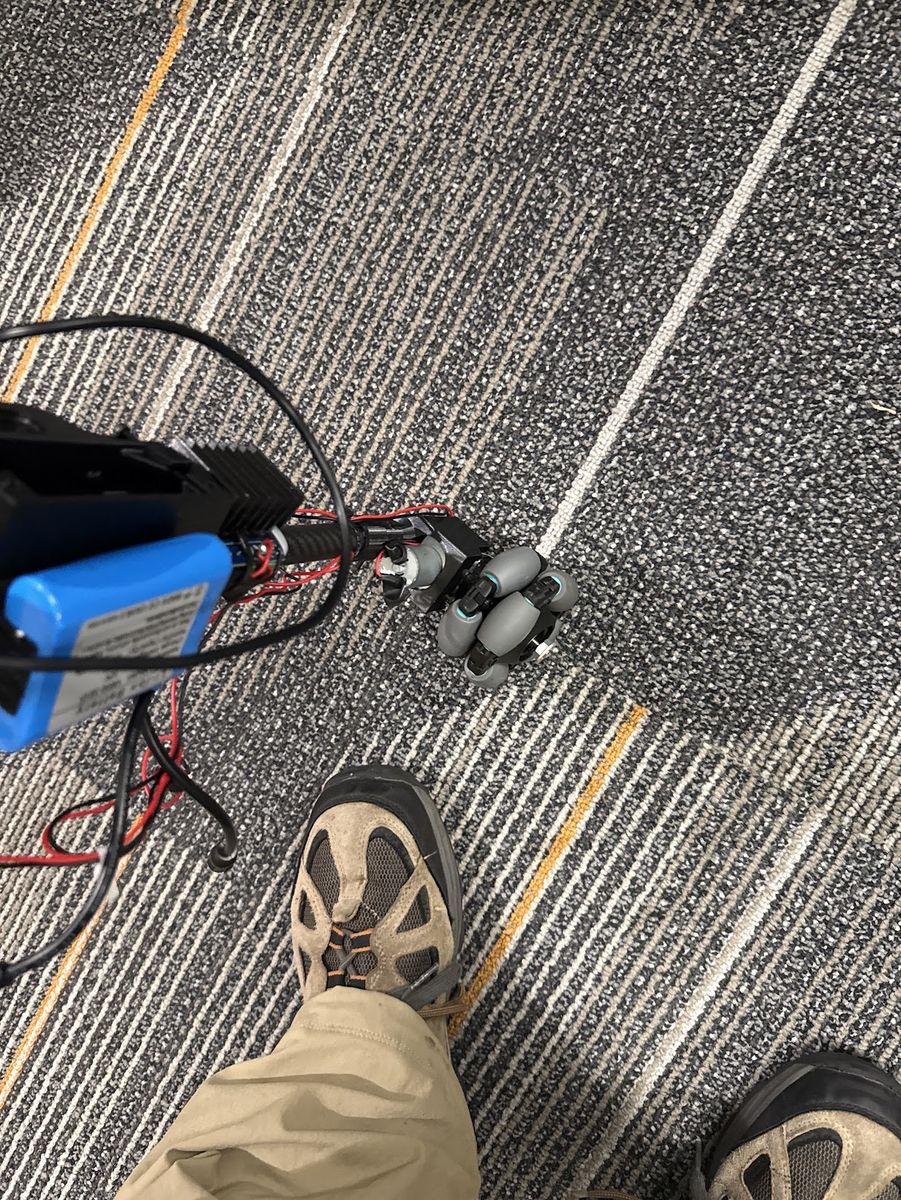
Hardware preview
The ASUS Ascent GX10 runs separately from the cane, so it is shown in the system flow below instead of being attached to the assembly.
Data flow
From camera to wheel
The phone and the cane’s electronics reach the GX10 over Tailscale, so they can be anywhere in the world as long as each has an internet connection.
- 01
iPhone 16 Pro
Mounted near the handle. Camera, LiDAR, and pose data describe the scene.
- 02
ASUS Ascent GX10
Off the cane. Local vision and depth checks choose a clear direction toward the target.
- 03
Raspberry Pi 5 + wheel
The Pi receives direction commands and controls the motor at the cane tip.
Bill of materials
What the cane is built from
Collected from the build notes in the repository. Several parts are designed or bought but not fitted yet.
| Qty | Item | Details |
|---|---|---|
| 1 | iPhone 16 Pro | Camera, LiDAR, and position |
| 1 | ASUS Ascent GX10 | Local AI and obstacle check, off the cane. Borrowed for the event |
| 1 | Raspberry Pi 5 | Motor controller, with a microSD card |
| 1 | Battery, 12 V 3 Ah | Li-ion pack of three cells (3S1P) on a barrel plug lead |
| 1 | Barrel-to-screw adapter | Splits the battery’s power two ways |
| 1 | Converter, 12 V to 5 V | 5 A, with a USB-C plug for the Pi |
| 1 | Motor driver, IBT-2 | BTS7960 board. No mount designed for it yet |
| 1 | Gearmotor, 12 V 120 rpm | Worm gear motor (JGY-370) with a 6 mm D-shaft |
| 1 | Omni wheel, 85 mm | Plastic wheel with rubber rollers, on a printed adapter |
| 6 | Jumper wire | Pi header to the motor driver |
| 1 | Talk button | 7 mm push button in the handle, wired to the Pi |
| Qty | Item | Details |
|---|---|---|
| 4 | Carbon-fiber tube | 18 × 16 mm, 400 mm long |
| 1 | Shock cord | 1/8 in, through the couplers so the cane folds |
| 4 | Handle, handle plug, camera collar, phone cradle | One of each |
| 7 | Keyed coupler inserts | Three main inserts and three receivers (v3), one main insert (v4) |
| 3 | Joint sleeve | One clamp over each tube joint |
| 3 | Motor mount, wheel adapter, wheel cap | One of each |
| 2 | Electronics mount | Raspberry Pi half and battery half |
| Qty | Item | Details |
|---|---|---|
| 18 | M3 × 20 socket-head screw | Clamps, joint sleeves, and the motor mount’s cross bolt |
| 5 | Other M3 screws | M3 × 10, two M3 × 12 to 16, M3 × 6 to 8, and one wheel screw |
| 20 | M3 nut | |
| 4 | M2.5 × 12 screw and nut | Raspberry Pi to its standoffs |
| — | Epoxy, tape, foam tape, hook-and-loop | Inserts into the tubes, grip under clamps, battery, and phone strap |